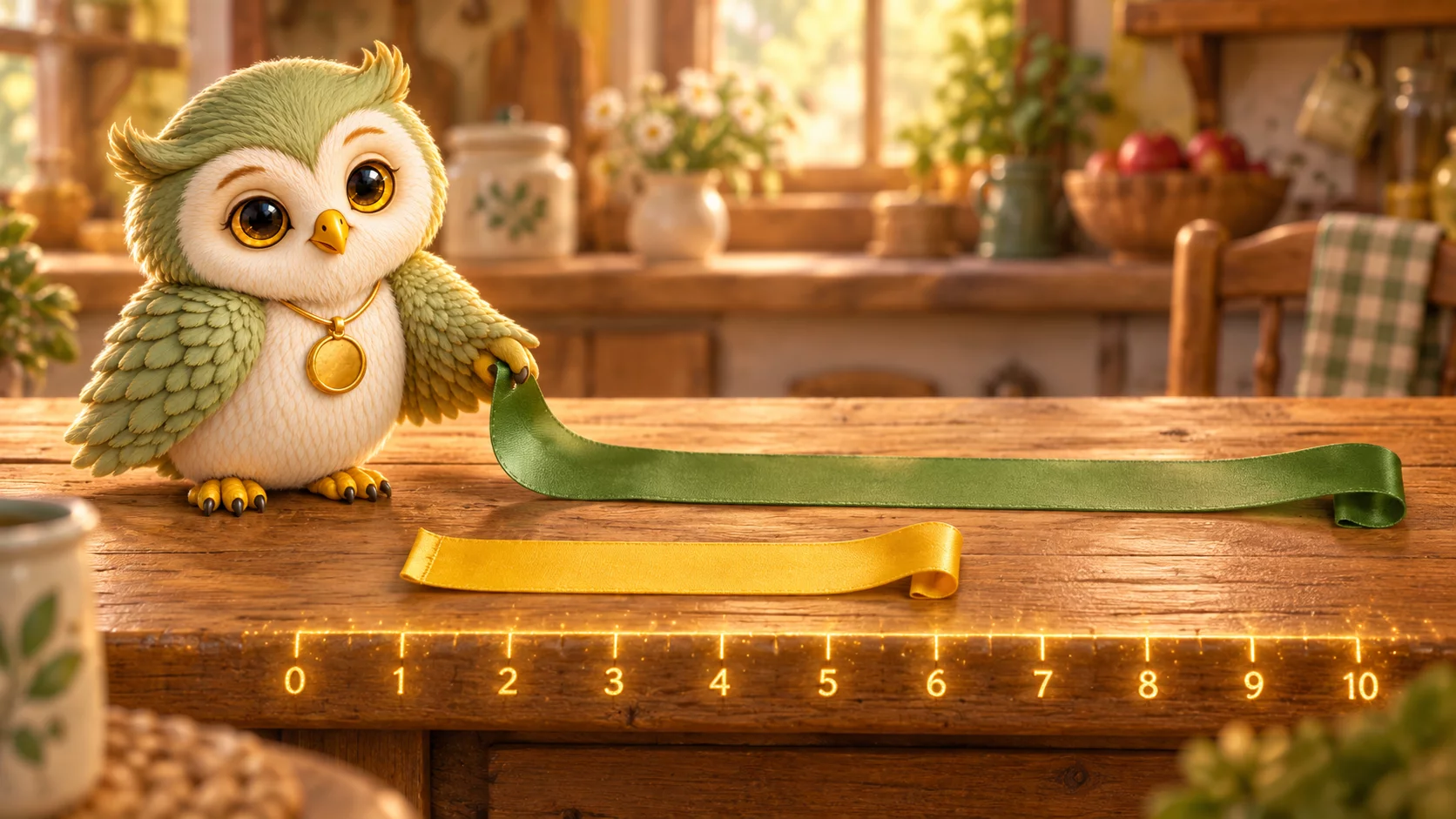
Your child doesn’t need a ruler to start measuring. They need two ribbons and one question: which one is longer?
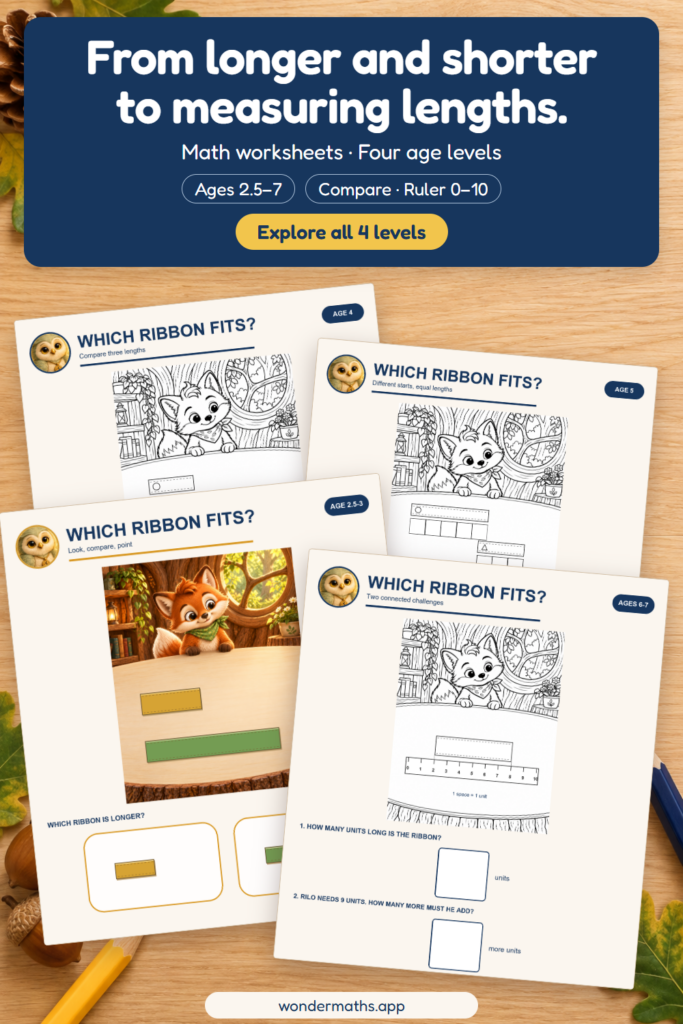
That question is the whole beginning of measurement, and it comes years before numbers on a ruler mean anything. The Which Ribbon Fits? set takes that one question and grows it through four levels, from pointing at the longer ribbon to reading a 0 to 10 ruler. Here’s what each level is doing, and how to pick the right one.
Why does measuring start with comparing?
Because a number on a ruler is a comparison in disguise. “Six units long” means “as long as six of these little spaces lined up.” A child who can’t yet see that one ribbon is longer than another has nothing to attach that six to.
So the first job isn’t counting anything. It’s looking at two lengths and deciding. Then three lengths. Then noticing that two ribbons can start in different places and still be the same length, which is the idea most kids trip over when a ruler finally shows up.
If your child is still working on which pile has more, they’re already doing this kind of thinking. Length is the same idea, stretched out in a line.
What does each level ask the child to do?
Every page has the same fox, the same table, and the same question in the title. What changes is the job.
- Age 2.5 to 3, full color: two ribbons, one longer. The child looks, compares, and points. No crayon needed. You say the words: “This one’s longer. This one’s shorter.”
- Age 4, outlines to color: three ribbons of different lengths. The child finds the longest, then the shortest, and colors them. Three is harder than two because the middle one has to be held in mind.
- Age 5: different starts, equal lengths. Two ribbons begin at different spots on the page, and the child has to figure out whether they’re the same length anyway. This is the level where a lot of kids say “that one’s longer” because it sticks out further on the right. Worth slowing down here.
- Age 6 to 7, two connected challenges: a ribbon lies on a 0 to 10 ruler. First: how many units long is it? Then: Rilo needs nine units, so how many more? The second question only works if the first one was measured, not guessed.
How do I know which level to print?
Not by the birthday. The age on the page is a label that helps you find the set in a search, not a test your child has to pass.
The rule we use at home is simple: if your child gets about seven or eight out of ten tries on their own, move up. If they need you for most of them, stay, or go one level down for a week. There’s no prize for the higher page, and a child who feels stuck stops looking.
A good sign you’re on the right level: the child argues with you about the answer. Arguing means they’re comparing.
What do I say while they work?
Each page has two lines at the bottom for you. The first is a sentence to say out loud. The second is what the task practices, in plain words. You don’t need to explain measurement. You need to name what they see.
“Which one’s longer?” “Do they start in the same place?” “How many little spaces does it cover?” Short questions, then quiet. The thinking happens in the pause.
If the ribbon page stalls, the same idea works with shoes, spoons, or two sticks from the yard. The set is one way to practice it, and blocks and boxes on the floor are another good one.
Which Ribbon Fits? is one ribbon task in four levels: longer or shorter, three lengths, equal lengths with different starts, and a 0 to 10 ruler with two connected questions.
No reading required · Prints clean in black and white · US Letter, print at 100% · Age 4 page opens right away, full set by email