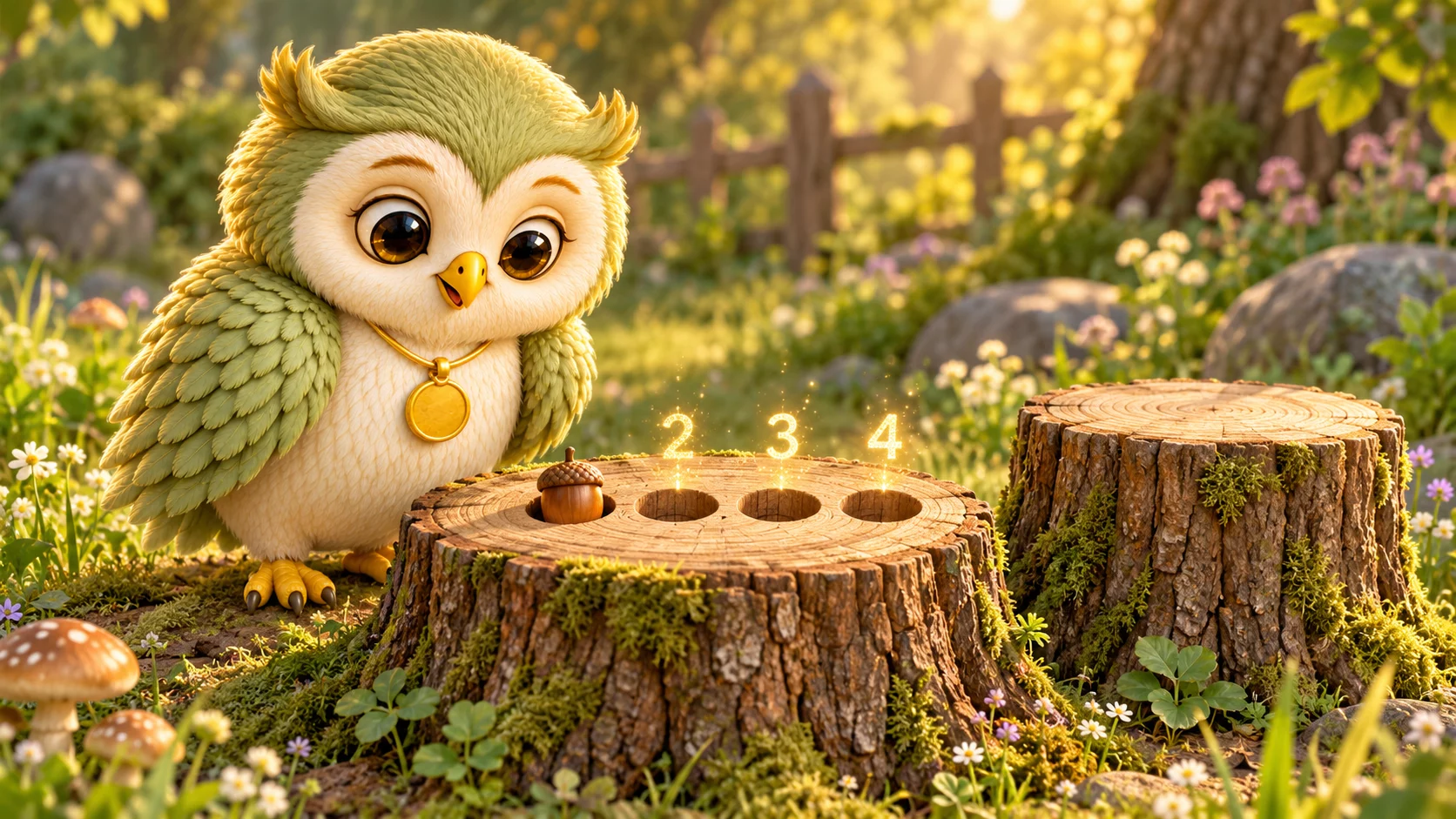
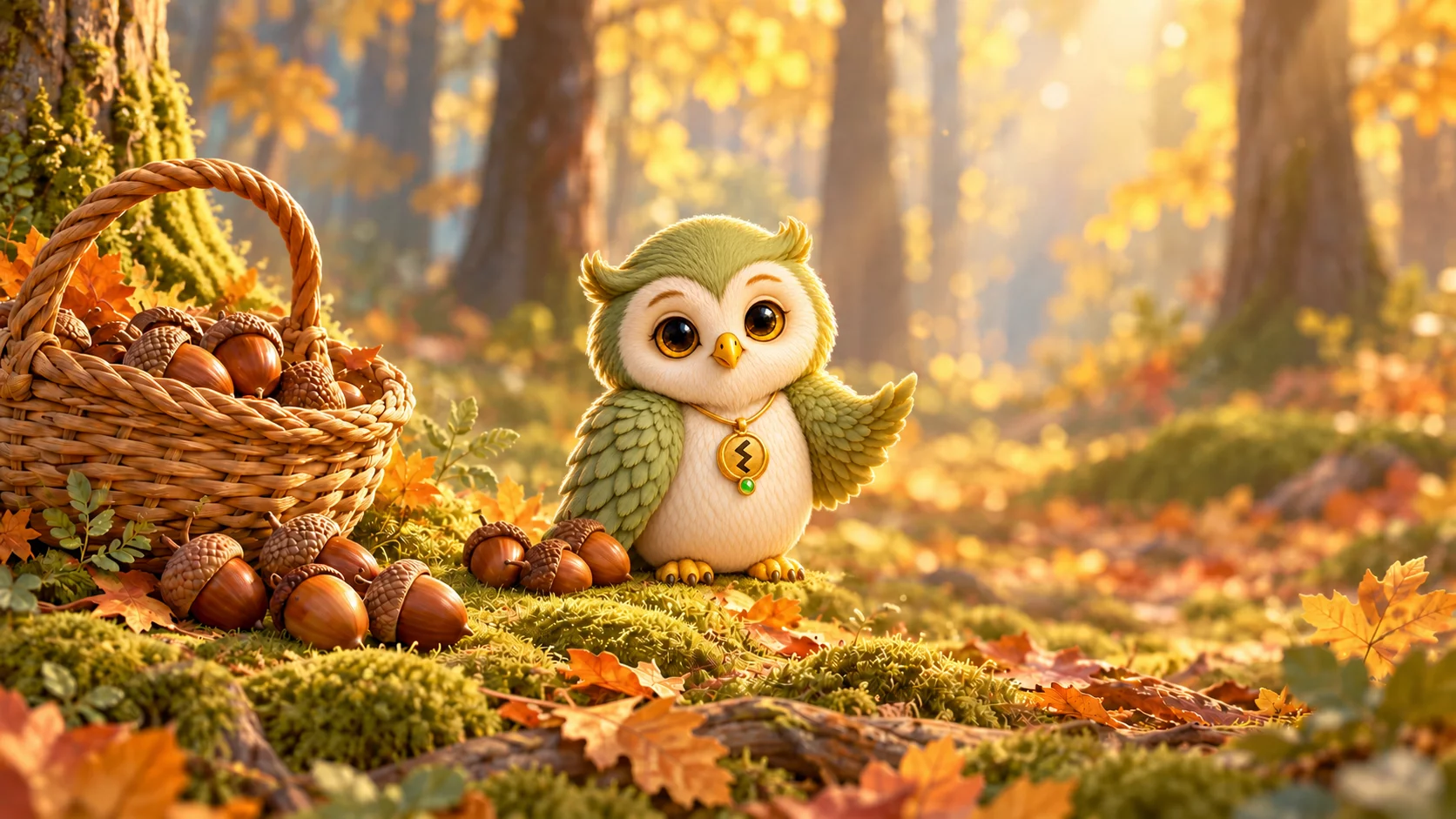
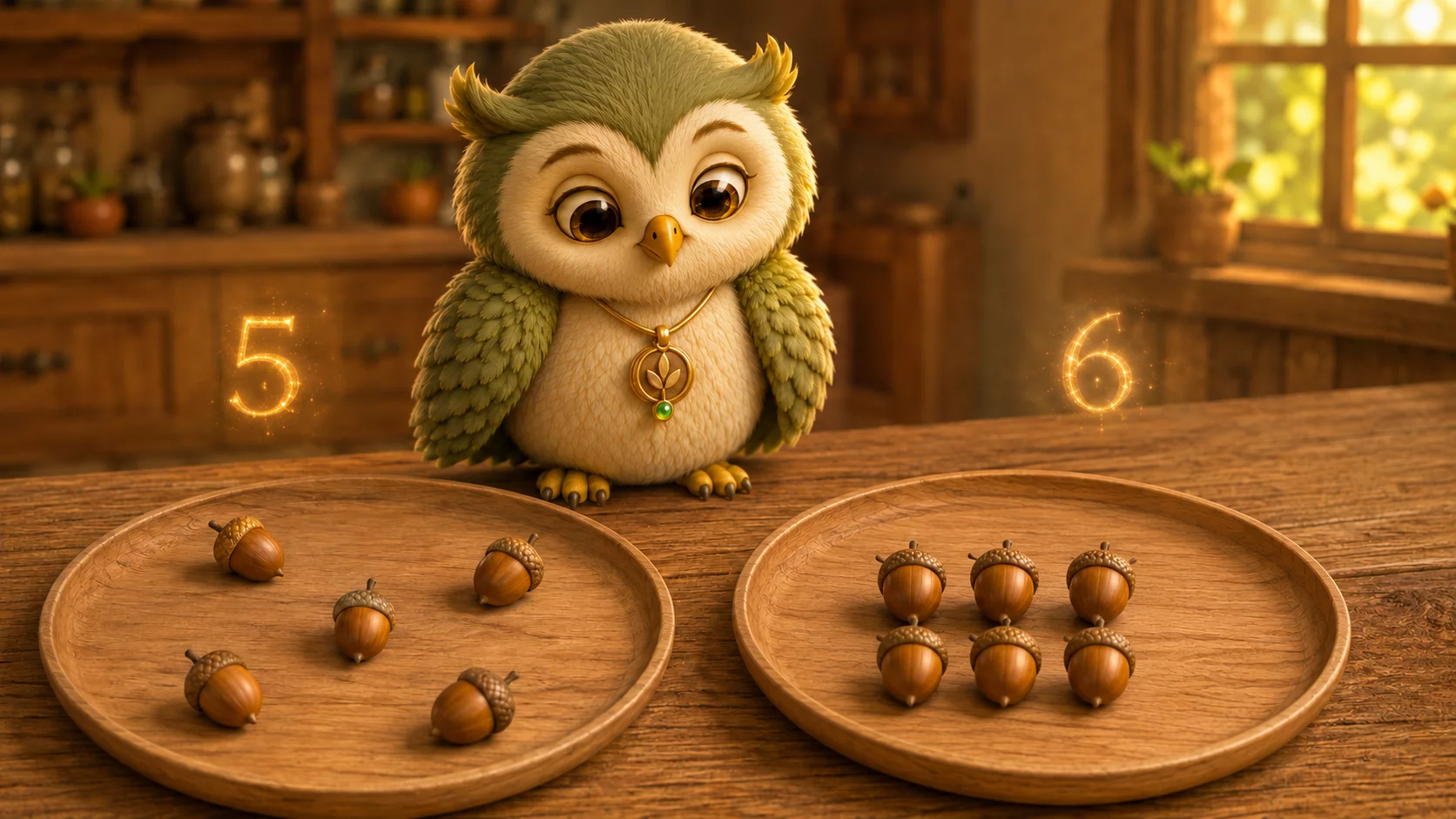
A child who puts acorns into holes and sees that one acorn is left over has just subtracted. They don’t know it’s subtraction. They don’t need to. The How Much Fits? set is built on that kind of noticing. Two tree stumps, each with a few acorn-sized places. Four levels that go from counting the … Read more
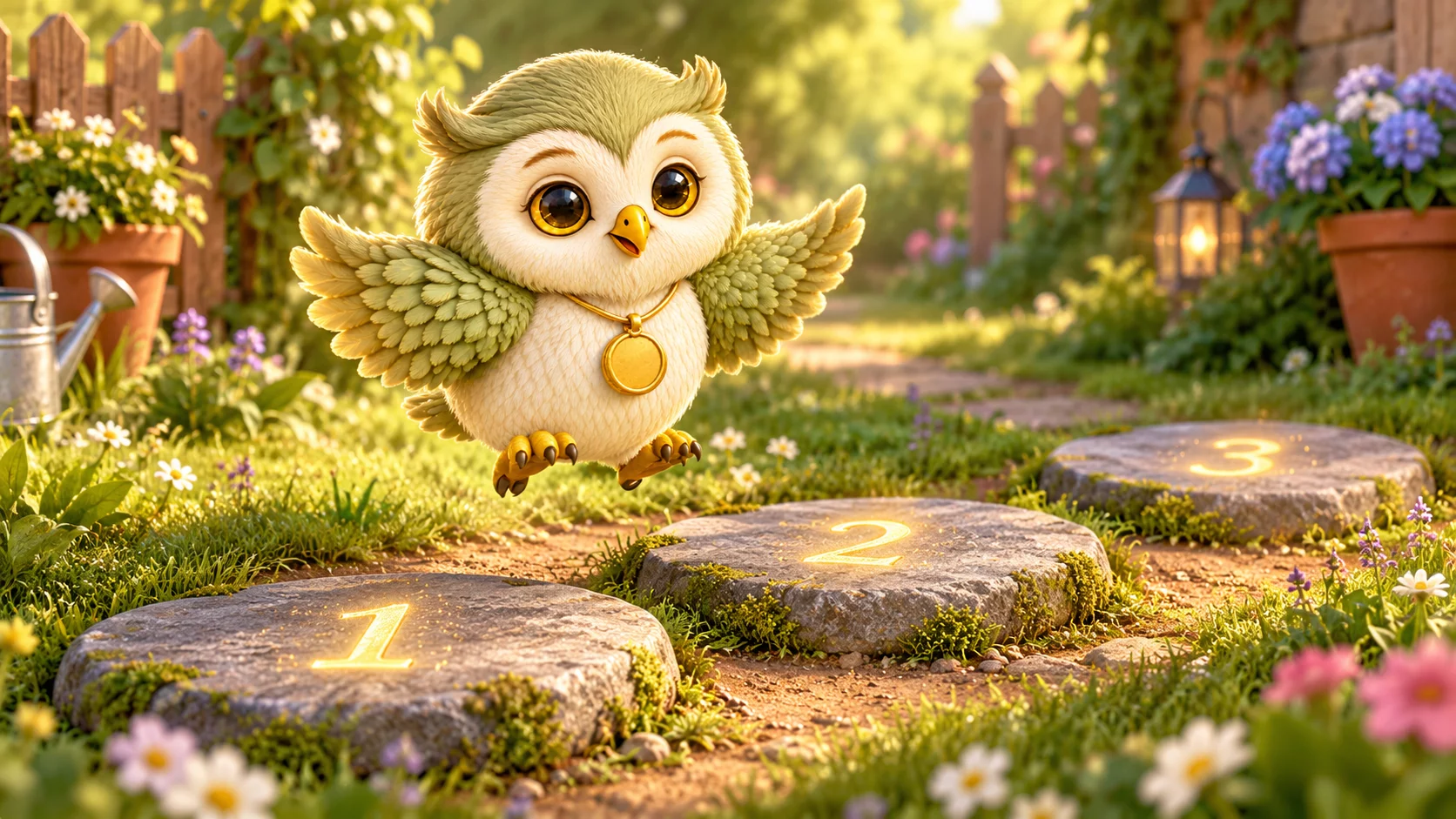
Before a child can understand that three comes after two, something simpler has to click: anything comes after anything. First, then, last. That’s the whole idea, and it’s older than counting. The First, Then, Last set uses three hedgehogs doing three little moves on stepping stones: crouch, reach up, hop. Same three moves on every … Read more
Most pattern worksheets ask “what comes next?” This set asks “what’s missing in the middle?” It sounds like the same thing. It isn’t. To fill a gap, a child has to read the pattern on both sides of it and find the rule that makes them agree. That’s a bigger job than adding one more … Read more
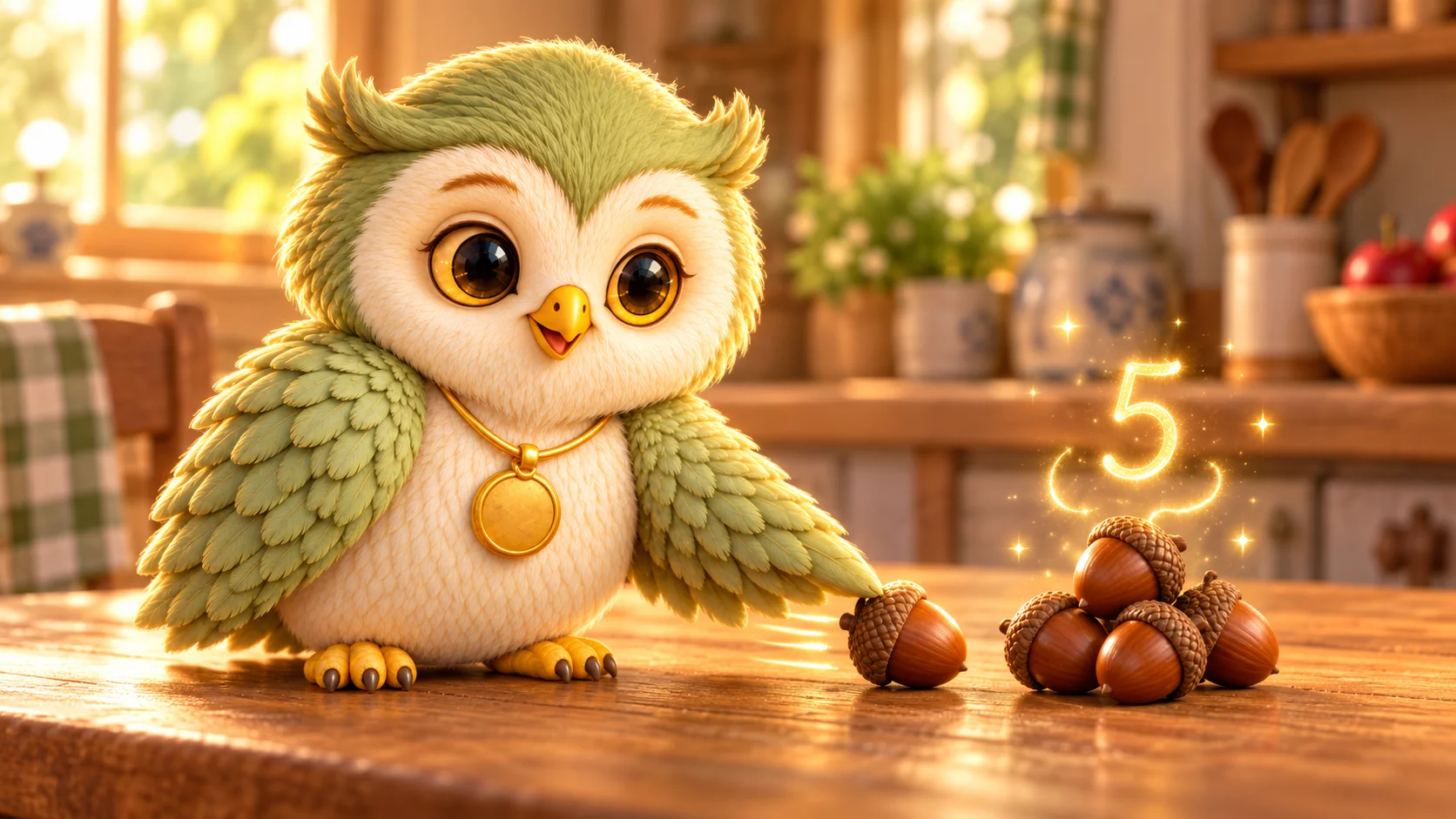
Your child has three acorns. You hand them two more and ask how many. They go back to the first acorn and start again: one, two, three, four, five. That’s not a mistake. It’s the stage before counting on, which is when a child holds the three in their head and says “four, five” from … Read more
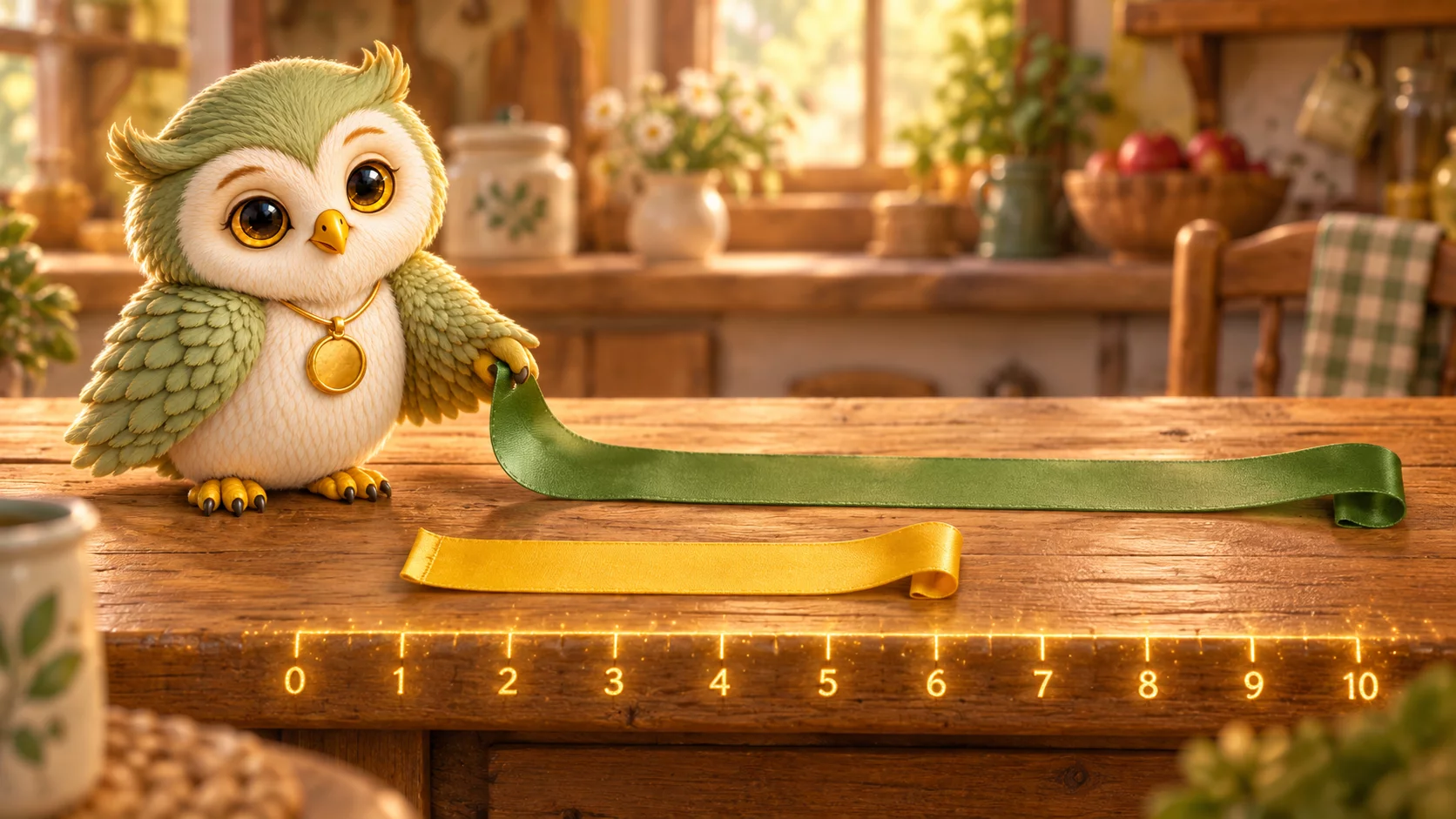
Your child doesn’t need a ruler to start measuring. They need two ribbons and one question: which one is longer? That question is the whole beginning of measurement, and it comes years before numbers on a ruler mean anything. The Which Ribbon Fits? set takes that one question and grows it through four levels, from … Read more
Your child worked something out on Tuesday. When do you bring it back? Most of us answer that by feel, which usually means either tomorrow, when nothing has had time to fade, or never, because the week filled up. Neither does much. The gap is the ingredient Something has to be slightly hard to recall … Read more
It is six in the evening. Dinner is somewhere between the pan and the table, and you have fifteen minutes before everything else starts. That is enough. Not a compromise version of enough — actually enough, as long as the fifteen minutes have a shape. Most of it is not new material The instinct is … Read more
When we started planning this series, the obvious way to split it was by age. Book one for three-year-olds, book two for four-year-olds, and so on up the shelf. That is how most things for children are organized, and there is a reason: it makes shopping easy. We did not do it that way, and … Read more
Most addition worksheets open with a plus sign. A row of them, actually — 2 + 1, 3 + 2, 4 + 3 — and a box at the end waiting for a number. For a child who already understands what adding is, that page is practice. For a child who does not yet, it … Read more
Kindergarten math starts with five ideas, and you can check each one at the kitchen table in about two minutes. None of them need a written number. Most kids arrive with some and pick up the rest during the year; that’s what the year is for. One thing before the list. If you’re weighing whether … Read more
Grade placement is a school decision, and a good one looks at the whole child: reading, writing, friendships, how she handles a full day. What you can figure out at home is what “ahead” means. Fast counting and big numbers are one kind of ahead. Understanding is another, and it’s the one that carries into … Read more
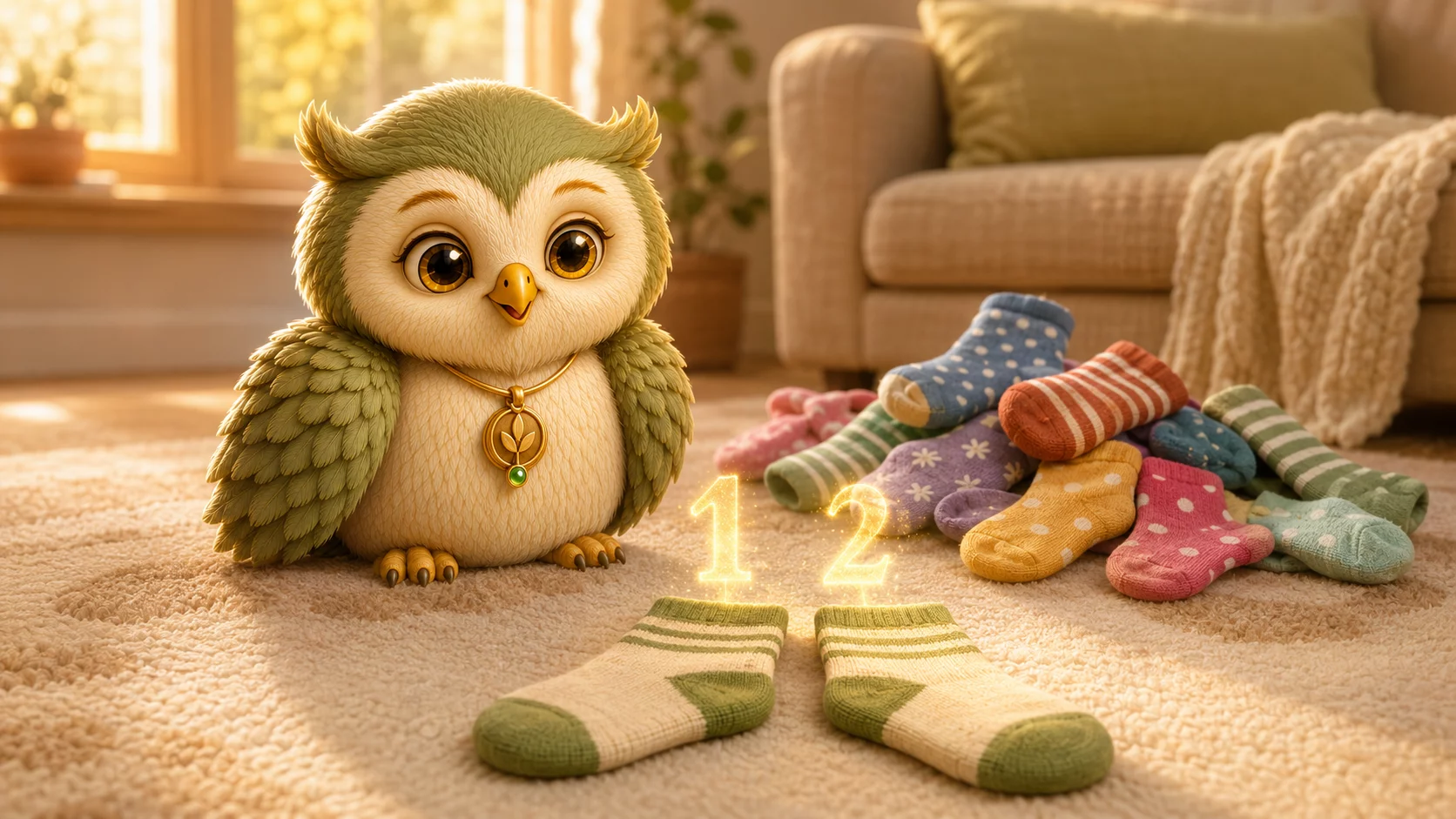
A lot, as long as nobody hands them a crayon. At 2.5, math is same-and-different, more-and-less, and putting one thing on top of another thing. Those are the roots of counting, and they happen with socks, cups, and snack. Here’s what’s common at this age, what you can leave for later, and what five minutes … Read more