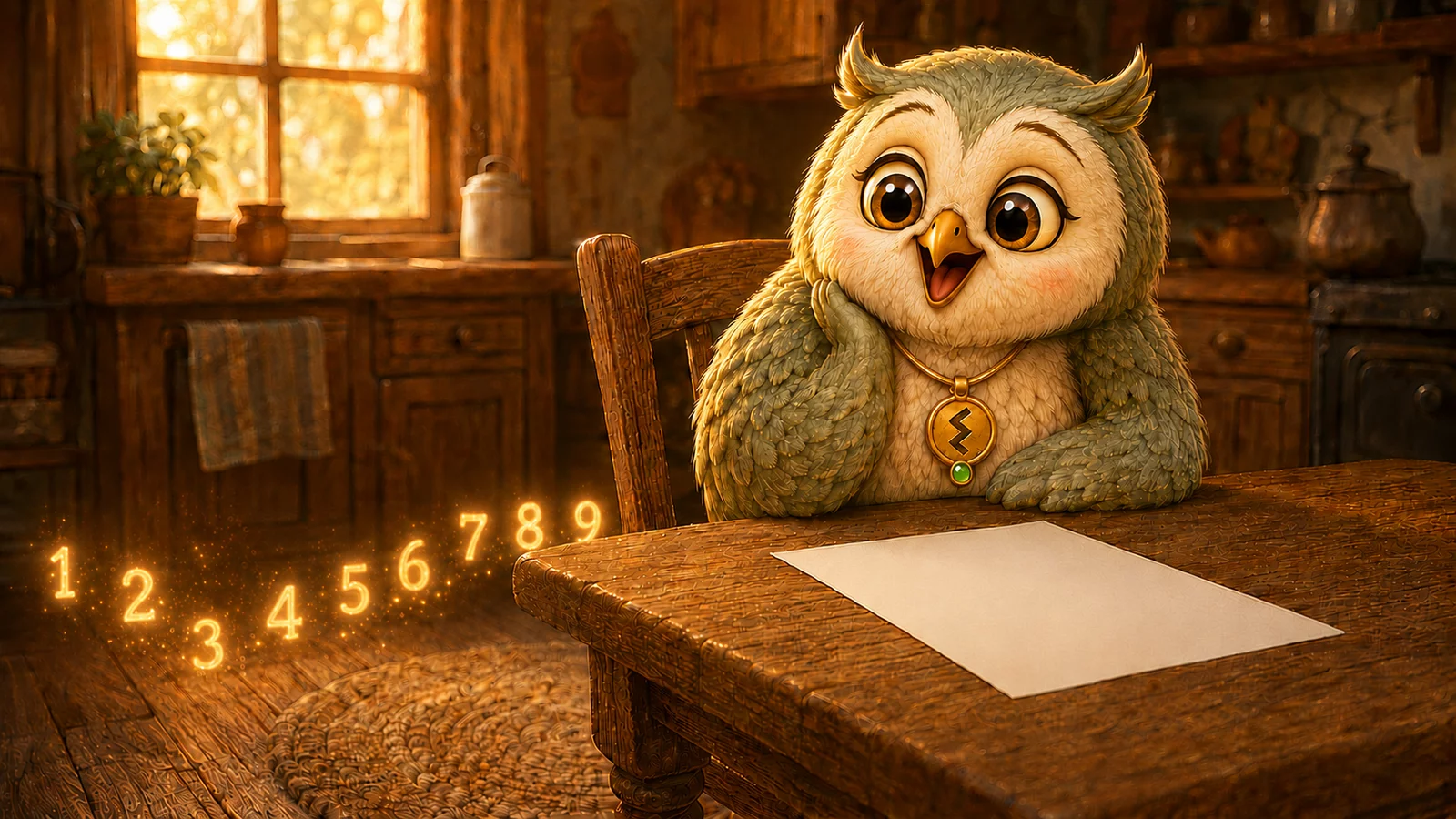
Worksheets get a bad name they don’t quite deserve. The problem isn’t that they’re harmful. It’s that they teach something different from what we think they teach, and at three and four that difference matters.
What a worksheet actually asks for
Look at what has to happen for a child to complete one row. They have to hold the quantity in their head while their eyes move. They have to keep their body still while their hand does something delicate. They have to read the layout — which is a skill nobody taught them — and they have to produce a mark that stands for something invisible.
The counting is maybe a fifth of it. The rest is sitting, tracking, gripping and symbol-handling, all at once.
Why it’s harder than it looks
That combination is genuinely demanding for a small child, and it hides what they know. A child who counts eight things confidently on the carpet may produce nonsense on paper, and the paper version is the one that gets remembered.
None of that means paper is useless. It means paper is a test of several skills at once, at an age when most of them are still arriving. Reaching for it early is the most natural thing in the world — it’s what we were handed ourselves — and it’s also the reason counting so often turns tense.
Moving the same task to the floor
Take whatever the sheet was asking and do it standing up. Instead of circling four apples, put out a pile of anything and ask for four of them, handed to you one at a time. Instead of matching numerals to groups, lay the groups on the floor and walk to the right one.
The thinking is identical. What’s gone is the sitting, the tracking and the pencil.
When paper does start to help
Later, and it’s worth waiting for. Once a child reliably knows that the last number counted is the total, and can compare two groups without counting them, paper becomes a good way to practice something they already own. Before that, it’s asking them to record an answer they’re still working out.
If it has already become a fight
Stop for two weeks. Not as a concession — as a strategy. Counting that has become a battle carries the battle with it into everything that looks similar, and two weeks of stairs, chalk and walking usually resets that entirely.
Then come back to paper sideways: one row, standing up at the table, and stop while it’s still going well.
Free printable: Ori’s Stepping Stones — five floor tiles to cut out and lay in a line. A number path your child walks and counts out loud, one jump at a time.
No reading required · Prints clean in black and white · One task per page